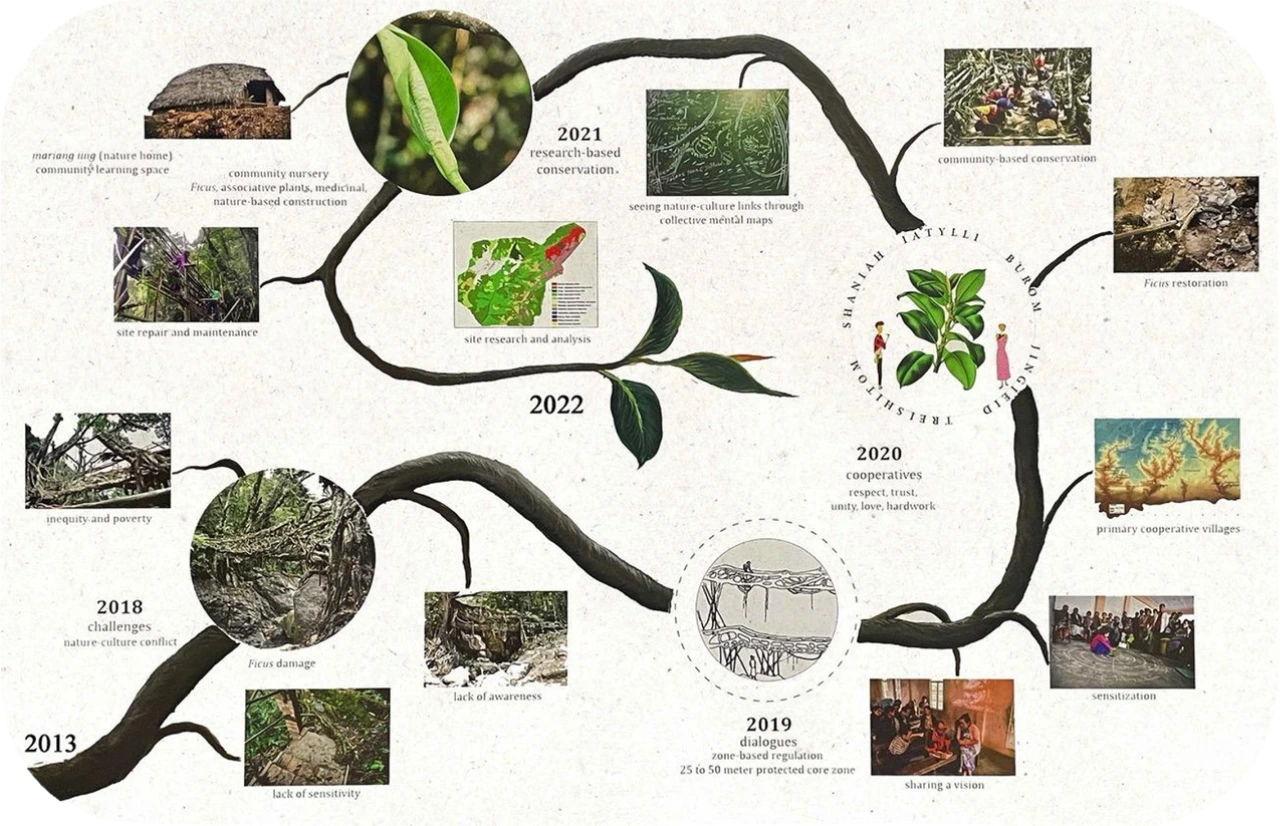
Jingkieng Jri / Lyu Chrai Cultural Landscape
Living Root Bridges of Meghalaya
enduring symbols of human–nature reciprocity, resilience, and cultural heritage.
Jingkieng Jri / Lyu Chrai
Cultural Landscape
Locally known as Jingkieng Jri, the Living Root Bridges (LRB) form the living core of the Jingkieng Jri / Lyu Chrai Cultural Landscape, where nature and culture are inseparably intertwined. These ficus-based living architectures are not merely crossings but enduring symbols of resilience, ingenuity, and reciprocity, crafted over generations by Khasi and Jaiñtia communities within the subtropical broadleaf forests of Meghalaya. Alongside the bridges, the cultural landscape encompasses a holistic way of life rooted in traditional knowledge, where forests, water, and soil are carefully conserved through indigenous practices, and livelihoods are sustained through agro-forestry, bamboo crafts, weaving, beekeeping, and spice cultivation.
Music, dance, rituals, oral traditions, and festivals are interwoven with the seasonal rhythms of the land, expressing a worldview where collective cooperation, reciprocity, and respect for the environment are the foundation of community life. Together, the Living Root Bridges and these interconnected practices demonstrate outstanding universal value. A profound human–nature reciprocity, the continuity of traditional knowledge and skills, the strength of social cooperation, and the resilience to adapt and thrive in one of the wettest regions on Earth. Sustaining over 75 villages through connectivity, culture, and ecological stewardship, the Jingkieng Jri / Lyu Chrai Cultural Landscape stands as a living testimony to human creativity in harmony with nature, a heritage of the past that continues to evolve, inspire, and endure.
Why Jingkieng Jri / Lyu Chrai
Cultural Landscape Matters?
Our work is more than the preservation of Living Root Bridges or traditions. It is the living memory of a people, carrying lessons, values, and resilience across generations. The Living Root Bridges of Meghalaya are not only remarkable examples of indigenous engineering but also enduring symbols of a worldview where humans and nature thrive together.
In a rapidly changing world, this heritage matters because it
Safeguards Indigenous Knowledge
Root bridge practices embody centuries of ecological wisdom and sustainable design, offering models for climate adaptation and disaster resilience.
Strengthens Identity & Belonging
Cultural landscapes like Jingkieng Jri affirm community pride, continuity, and intergenerational ties.
Guides the Future
Protecting and nurturing heritage ensures that future generations inherit not only physical landscapes but also the wisdom, values, and cooperative spirit they represent.
Supports Sustainable Livelihoods
By linking ecology, culture, and economy, heritage sustains local livelihoods through agro-produce, handicrafts, eco-tourism, and knowledge-sharing.
Promotes Global Relevance
Recognized on UNESCO’s Tentative List, the Living Root Bridges stand as a universal symbol of harmony, reciprocity, and ingenuity.
Conservation Efforts: Preserving Living Heritage
Through Grassroots Action
At Syrwet U Barim, conservation is not a static preservation model; it is an active, living commitment carried out across 63+ villages in Meghalaya.
SENSITIZATION
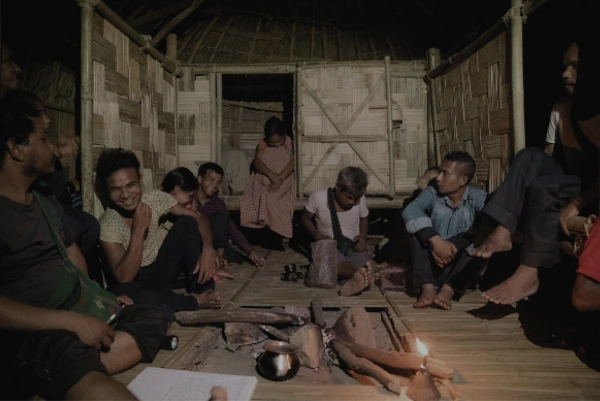
performances, exhibitions, traditional practices
JINGKIENG JRI
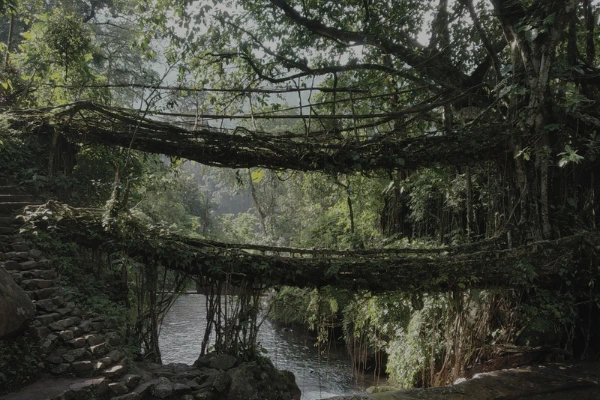
skill-sharing, hands-on community learning
ÏING MARIANG
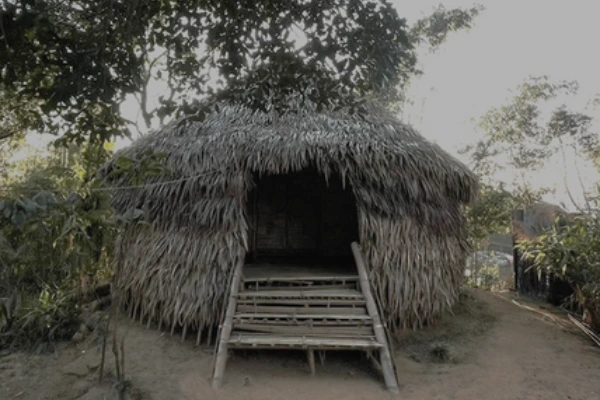
working with villages,
youth, artisans
‘PER SARA
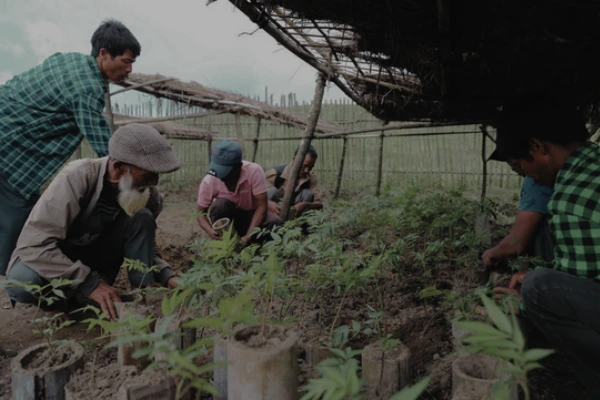
performances, exhibitions, traditional practices
LYNTI SYNGKIEN
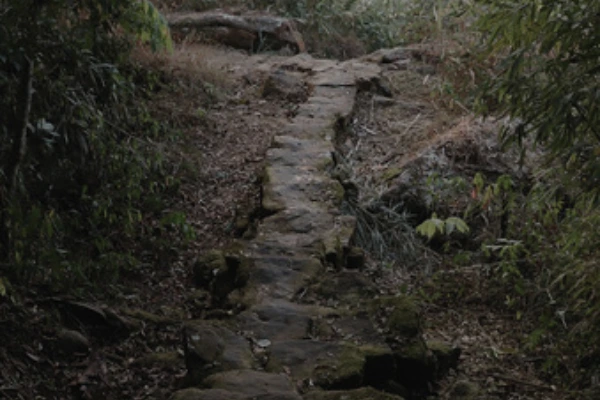
skill-sharing, hands-on community learning
FESTIVALS
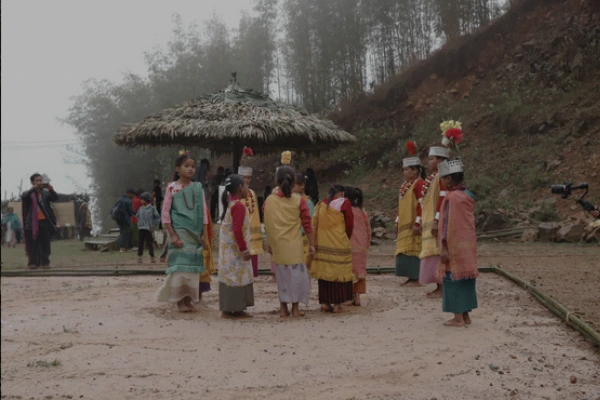
working with villages,
youth, artisans
UNESCO nomination journey